A Pest Control Professional Explains the #1 Mistake Homeowners Make When Dealing With Mice
After 22 years and thousands of homes, I've finally figured out why traps, poison, and pest-control visits never permanently solve a mouse problem. The answer is almost embarrassingly simple — and it's not something my own industry loves talking about.



I've Treated Homes for Rodents for Twenty-Two Years. It Doesn't Work. Here's What Does.
Last month I pulled up to a house I've treated for going on four years. Same address. Same client. Same problem.
She was standing at the door before I even had the truck in park. Arms crossed. That look I've seen more times than I can count — frustrated, a little defeated, embarrassed, like it was somehow her fault the mice kept coming back.
It wasn't her fault. It's never really been the homeowner's fault.
"I don't understand," she said as I walked in. "We keep everything clean. We sealed the gaps your last visit flagged. We've done the traps, the bait, the quarterly visits for years now. And they're back. I found droppings in the silverware drawer this morning."
I knew exactly what she was feeling, because I've had that conversation more times than I can count in twenty-two years of doing this. And here's the part that's hard to admit:
I knew before I even walked in the door that whatever I did that afternoon would work for a few weeks. Maybe two months. Then she'd be calling again.
Because that's how it goes. That's how it's gone for as long as I've been doing this work.
After two decades treating homes for rodents, the hardest part of my job was never killing the mice. That part's simple.
The hard part is watching good people spend money year after year on a problem that never actually goes away — and knowing the way I was trained to do this job is part of why it keeps coming back.
I'm writing this because you deserve to understand why nothing you've tried has worked for good. Not because you did it wrong. But because the whole approach — the one I was trained in, the one most of my industry still runs on — is fundamentally backwards.
The Uncomfortable Truth About How We Deal With Mice
Here's what nobody in my industry says out loud, so I'll say it.
Killing mice does not solve a mouse problem.
I know that sounds strange coming from someone who's killed thousands of them for a living. But after twenty-two years and thousands of homes, this is the single biggest thing I've learned — and it's the reason your mice keep coming back no matter what you throw at them.
Let's walk through what you've probably already tried.
Snap traps
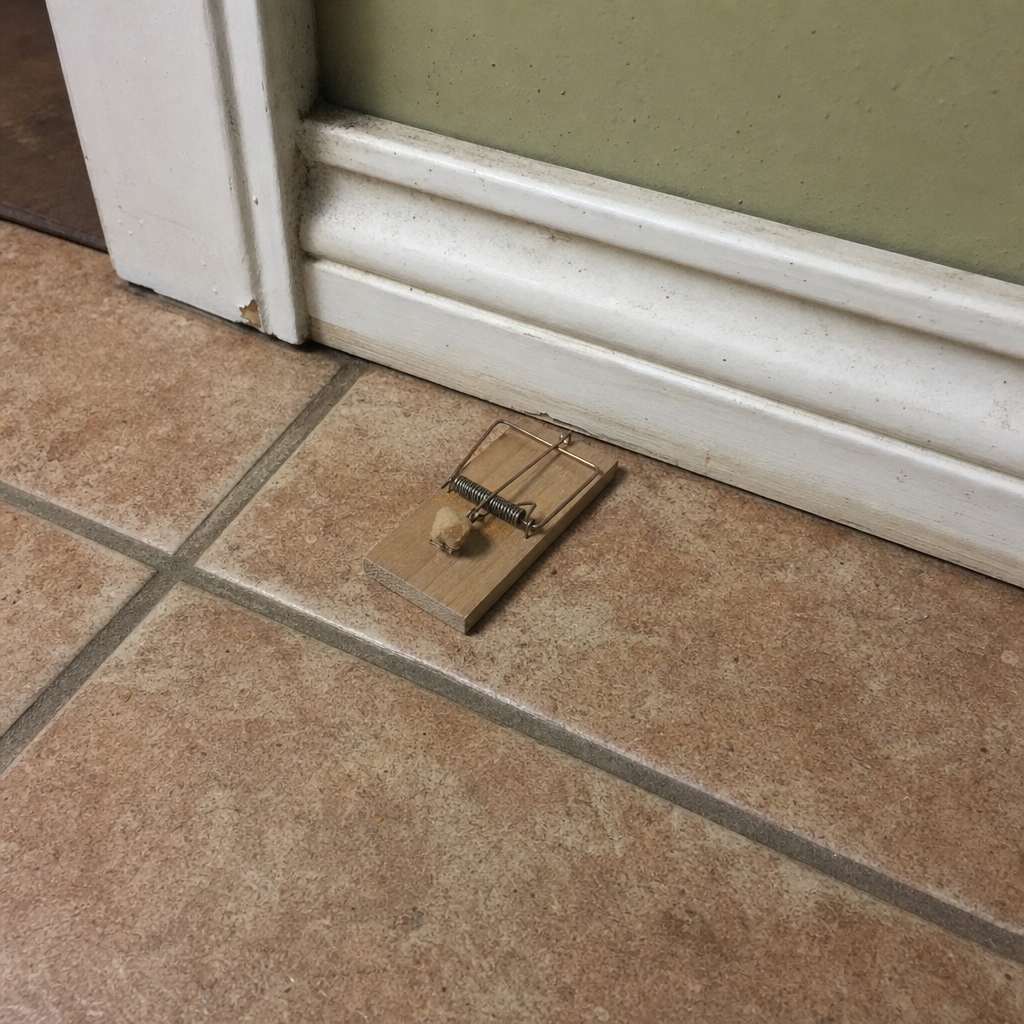
A snap trap kills one mouse. One. You set it at night, hear the snap, and there's a dead mouse by morning. Problem solved, right?
Except a single female mouse can produce five to ten litters a year, six to eight pups a litter. That's potentially sixty to eighty new mice from one female in a single year. You caught one. She made sixty more. You are never going to out-trap a mouse's breeding rate.
And then there's the part nobody enjoys — the disposal, the mess, the trap dragged halfway across the kitchen floor at 3 a.m. because it didn't finish the job. Every homeowner I've worked with has a trap story. It's unpleasant work, and it still doesn't solve anything.
Poison
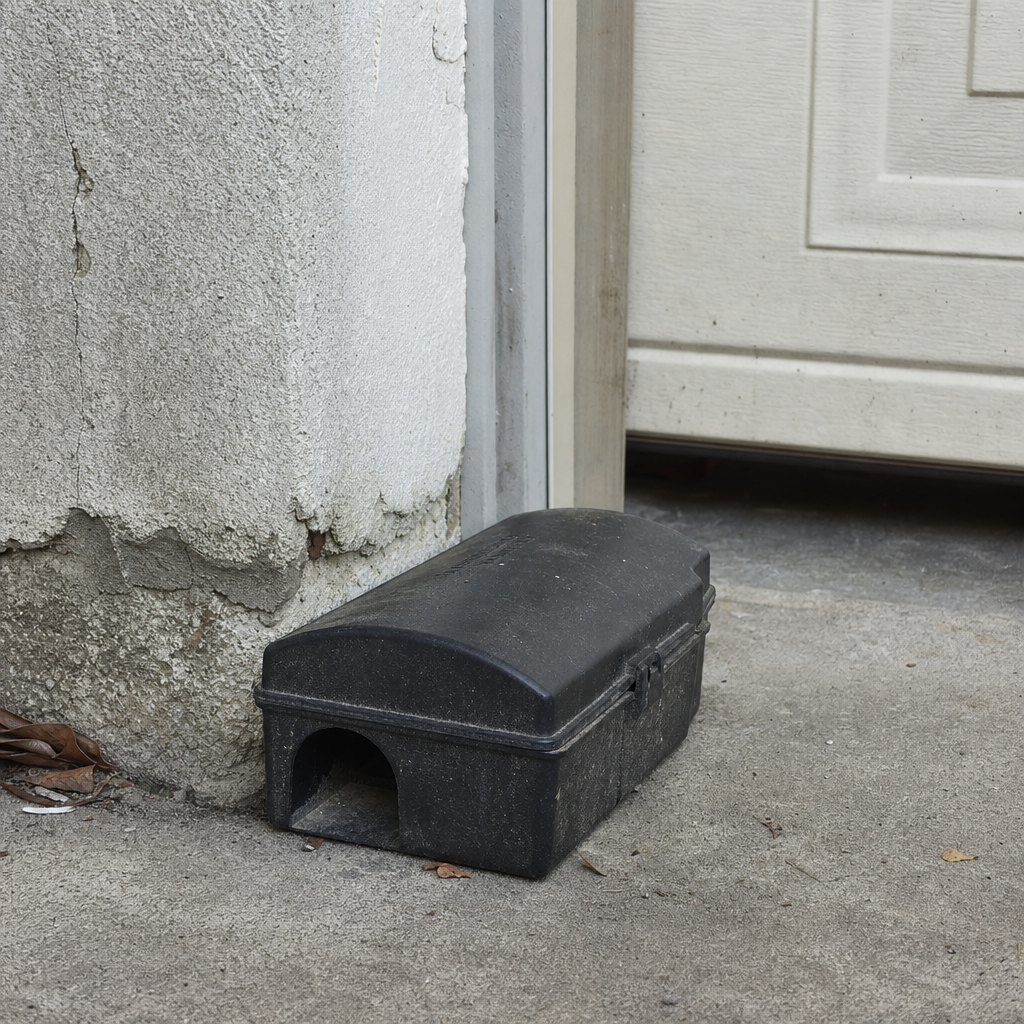
Same math problem as traps, plus a new set of issues. Poison kills the mice that eat it. New mice move into the same entry points within weeks, because the house is still just as attractive to them. The food's still there. The warmth's still there. The shelter's still there. You cleared out the tenants; you didn't change the property.
And if a mouse eats bait and dies somewhere you can't reach — inside a wall, under the floor, behind a cabinet — you're looking at two or three weeks of a smell that no air freshener touches. I've told more homeowners than I can count, "there's a dead mouse in your wall, and we're going to have to wait for it." The look on their faces never gets easier. Add in the risk to pets and grandkids around any loose bait, and it's not a solution most of my clients are comfortable with.
Exterminators (including me)
I need to be honest about my own trade.
When you call someone like me, we come to your house. We spot the activity. We set traps and bait. We seal a few obvious gaps. We charge you $150 to $300.
Then we leave.
The mice die. The activity stops. You think it's handled.
Six to ten weeks later, the droppings are back. The scratching's back. You call again. We come back. Same thing. Another $200.
Most of my regular clients are on a three-month cycle — four visits a year. $600 to $1,200 annually. Some have been doing this five, six, seven years. That's $3,000 to $8,000 spent on a problem that's never once actually been solved.
I'm not saying people in my trade are scamming anyone. The treatments work — we kill the current mice. But we're treating the symptom, not the cause. And frankly, the business model depends on the problem coming back. If I permanently solved your mouse problem on the first visit, you'd never call me again. Think about that.

The other things you've probably already tried
- Sealing entry points yourself — genuinely useful, but almost impossible to do completely on your own. A mouse can squeeze through a gap the size of a dime, and an older home has dozens of those around pipes, vents, the foundation, and door frames.
- Peppermint oil — a single scent that fades within hours. Mice get used to it within a day or two and walk right past it. Save your money.
- Cheap single-frequency ultrasonic plug-ins — the FTC has actually sent warning letters to a long list of manufacturers over exactly this, because there's never been solid evidence backing the claims.
- Steel wool in gaps — slows them down for a while. Mice can work through it eventually, or just find the next opening.
The Insight That Changed How I Think About Mice
About two years ago, something odd happened in my client list. Three of my longest-running clients — families I'd been treating every three months like clockwork for years — all stopped calling within about six months of each other.
I figured they'd moved, or switched to another company, or just given up. But when I followed up, each one told me close to the same thing:
"We don't need you anymore. We haven't had a mouse in months."
One family had been my client for five years running. Then nothing. Eight months, no droppings, no scratching, no gnaw marks.
When I asked what changed, each one mentioned the same kind of thing without me even asking: they'd started using a plug-in deterrent alongside sealing up the gaps I'd already flagged on past visits.
I was deeply skeptical. I've been in this trade for twenty-two years. I've watched peppermint oil fail in real time. I've listened to clients rave about ultrasonic gadgets, only to call me back three weeks later with the same problem.
But three separate clients I trusted, all reporting close to the same result, is hard to ignore. In this line of work, you learn to pay attention to a pattern.
So I looked into what was actually going on. And it changed how I thought about the whole problem.
"If you've seen one mouse, there are usually many more — or soon will be." A rule pest professionals have repeated for decades — and one most homeowners already know in their gut.
Why Repelling Works When Killing Doesn't
Here's the part that changed things for me, and it's almost embarrassingly simple once you hear it:
Every method you've tried kills or traps mice that are already inside your house. None of them make the house itself a place mice don't want to be.
That's the real flaw. You're pulling weeds without touching the soil. Mopping the floor while the tap's still running. You clear out the current mice, but the house is still warm, still holds food, still offers shelter. So new ones move in to fill the gap. Every time, without fail.
The actual fix isn't killing mice faster. It's making the house itself feel wrong to a mouse — not because there's a trap waiting, not because there's bait on the floor, but because every instinct in its body is telling it something's off.
Mice lean on their sense of smell more than anything else they've got — roughly fourteen times sharper than yours or mine. They use it to find food, spot danger, get around in the dark, and warn each other. Smell is close to their whole operating system.
When the right combination of signals hits their senses at once, it doesn't just smell wrong to them. It trips something closer to a genuine fear response — the same alarm that fires when a predator's nearby. Instinct takes over, and they clear out. Not wander off. Clear out.
And here's why that's different from killing: when you kill or trap a mouse, you open up one spot, and another one fills it, because the spot's still there for the taking. But when you make the whole area register as dangerous, every mouse that comes near gets the same signal. They steer clear. No dead mice to deal with. No new ones moving in behind them. No cycle.
Why Cheap Ultrasonic Gadgets Failed You (And Why This Is Different)
I know what you might be thinking. Maybe you've already tried one of those single-frequency plug-ins from a big-box store or a late-night ad, and it didn't do a thing.
You're right not to trust it. Here's why it failed.
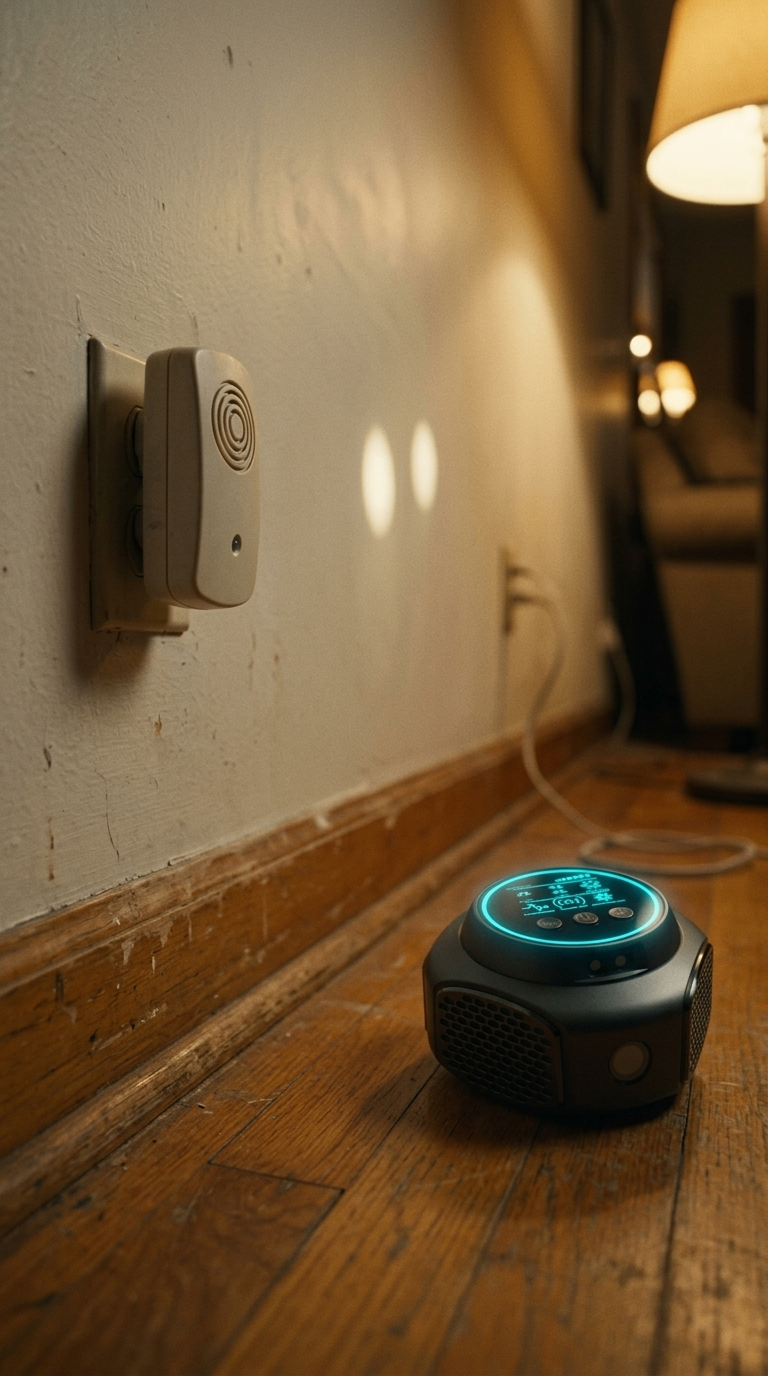
A single-frequency ultrasonic gadget puts out one kind of signal. Mice are sharp animals — they get used to a single, unchanging signal fast. Within a day or two, it's just background noise. They walk past it like it isn't even there. I've watched this fail in hundreds of homes. I wouldn't recommend it to anyone.
What actually works is a system that hits a mouse's senses on more than one front at the same time, so the signal never fades into background noise the way a single tone does.
I explain it to homeowners like this: one ultrasonic tone is like clapping once to scare a bird off your porch rail. It flinches, then it's right back. A layered system that hits multiple senses at once is more like a smoke alarm that won't quit going off. You don't get used to that. You leave.
What DremaTech's 4-in-1 Rodent Shield Actually Does
I'll be straight with you, the same way I'd want it explained to me: no deterrent, ours included, replaces sealing the gaps that let rodents in to begin with. What it does is buy you the pressure and the time to close those gaps properly — without poison on the floor or dead mice to deal with.
You don't have a mouse problem. You have an entry-point problem — and a home that needs to feel unsafe for rodents again while you close that gap.

This 50% price is tied to this specific page and this visit — it isn't the listed price on our product page, and it won't be honored again once your 48:00:00 window closes.
What Homeowners Like You Are Saying

First real night's sleep in weeks!
Hadn't slept through the night in almost two weeks. Every time I dozed off I'd hear it again, right above the bedroom. My wife thought I was losing it honestly. Plugged this in on the Tuesday, put it up near the loft hatch like the guide said. Thursday night was the first full night I'd had in weeks. Woke up actually rested for once.

Finally feels like my garage again
I've kept this garage in order for thirty years, never had a problem I couldn't handle myself until this. Found droppings behind the workbench and it threw me, honestly. Got a quote from an exterminator and about fell over at the price. Ordered this instead, followed the placement guide, sealed a gap by the side door myself. Feels like my space is mine again haha.

Wish I'd found this before the pantry shelf
What got me wasn't even seeing one, it was finding droppings on the shelf right next to where the grandkids' snacks were kept. Made my skin crawl thinking about what they'd been exposed to... Won't do poison with the dog and grandkids in and out of the barn all summer, so this was really the only thing that made sense. Three weeks now, nothing on that shelf since.
Questions Homeowners Ask Me Before They Try It
I won't oversell it to you. It uses four deterrent signals at once, and it's strongest when you pair it with the entry-point guide that comes with it. That's why it's backed by a 60-day trial — you get the time to see it working in your own house.
That's a fair worry — I've seen it fail in hundreds of homes. Single-frequency gadgets fail because mice get used to one unchanging signal. This isn't that — it layers four different signal types so there's nothing for them to get comfortable with.
It's poison-free — no bait, no pellets, nothing for a curious dog or grandchild to get into. If you keep small pets like hamsters, gerbils, or rabbits, check the placement guidance before use.

Being straight with you: lasting results come from pairing the deterrent with sealing the gaps and cutting off food sources, exactly like the guide walks you through. The unit does the pressuring; you do the sealing. Together, that's what actually holds.
Most homeowners notice activity easing off within days to a couple of weeks, depending on how bad it was to start and whether the obvious gaps get sealed alongside it.
Send it back within 60 days for a full refund. No contract, no restocking fee, no hard questions.
Take the House Back
You've already tried the traps. Maybe the poison, maybe a plug-in that let you down, maybe a pest-control bill you're not eager to repeat. None of that means you did anything wrong — it means the approach was built backwards from the start.
Pressure the mice out, close the gap they came through, and get your sleep back. That's it. That's the whole idea.