Why So Many Truck and Car Owners Keep Waking Up to Chewed Wiring and Nesting Rodents—And Why Most Fixes Keep Missing the Real Problem
A longtime auto mechanic on what he found under his own hood, and why the plug-in gadget aisle never actually solved it.
The most overlooked threat sitting in driveways and garages across the country right now?
Rodents moving into stored and daily-driven vehicles.
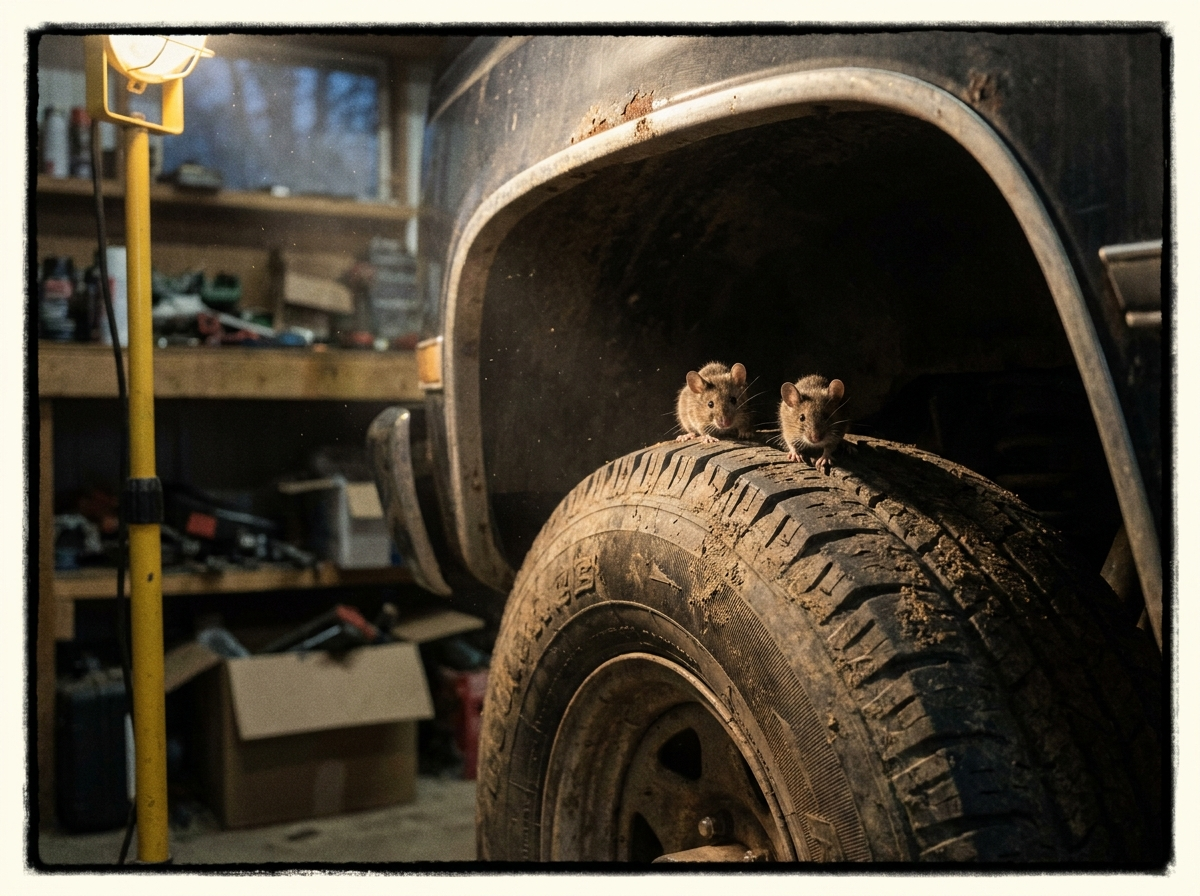
It's the kind of damage that builds quietly, overnight, while the truck sits innocently in the garage or driveway.
And here's the part nobody warns you about: most owners don't catch it until it's already expensive. First it's a check-engine light. Then a diagnostic bill. Then the shrug from whoever's under the hood: "Yeah, rodents are everywhere lately. Not much anyone can do."
Hardworking vehicle owners end up staring at repair estimates that rival a car payment, asking themselves the same question.
"How Did One Mouse Cause This Much Damage?"
I asked myself that same thing.
My name's Walt. I've spent close to thirty years as an independent auto mechanic, running a small shop out of my own garage for most of it.
For years, when a customer brought me a truck full of chewed wiring, I'd tell them the same thing every mechanic tells you: "You need to keep on top of this." I never told them how.
Rodents Don't Just Visit a Parked Vehicle. They Move In.

I've diagnosed just about everything a truck engine can throw at you. This one caught me off guard in my own garage.
I noticed the symptoms about three weeks in. Rough idle. An intermittent misfire. My own F-150, the one I'd owned eight years without a single real issue.
When I finally popped the hood, my stomach dropped:
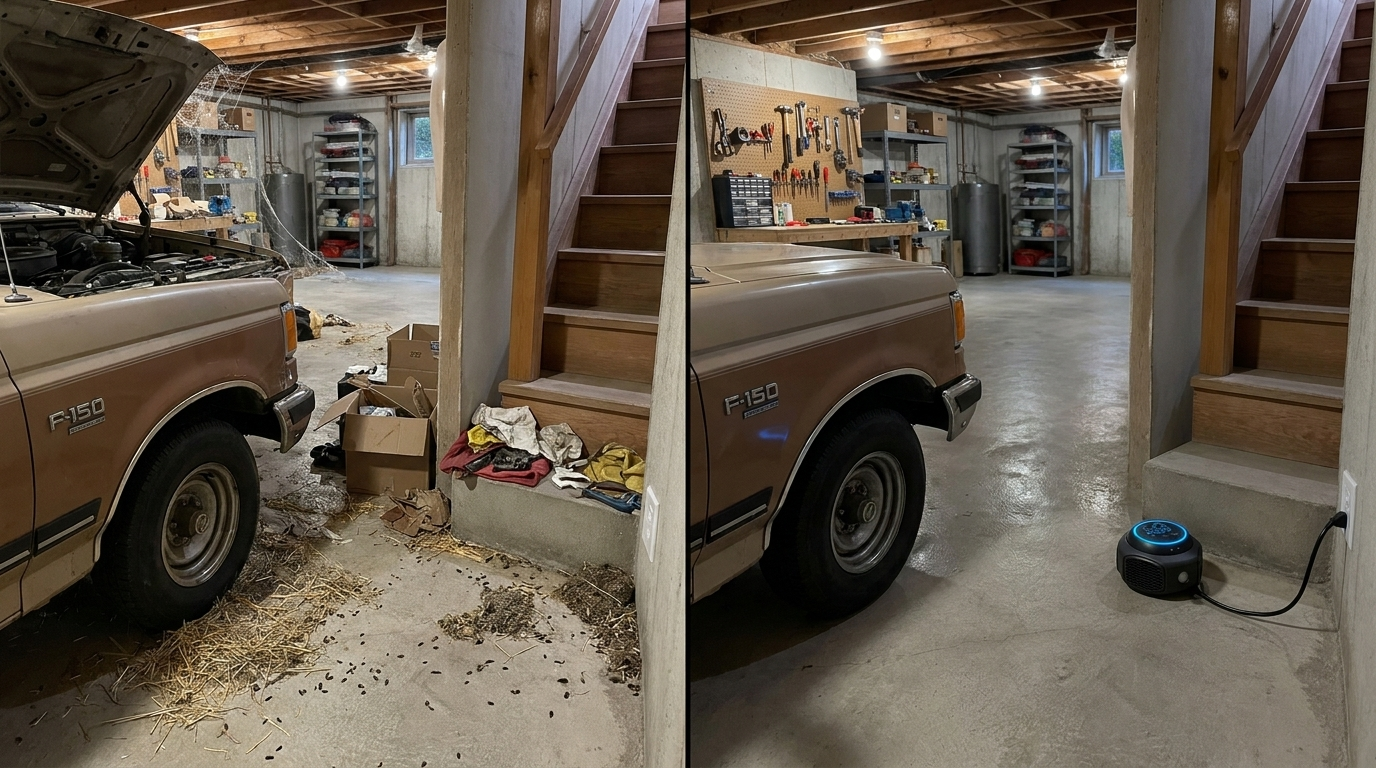
- Chewed insulation hanging loose from the wiring harness near the fuse box.
- A half-built nest of shredded paper and leaves wedged against the intake.
- Fresh droppings across the fender well and the garage floor beneath it.
My wife had been asking about a smell for a week. I figured it was road debris on the exhaust. It wasn't.
I'd told plenty of customers "you should've caught this sooner." Now I was that customer.
I'd Tried Everything the Aisle Sells
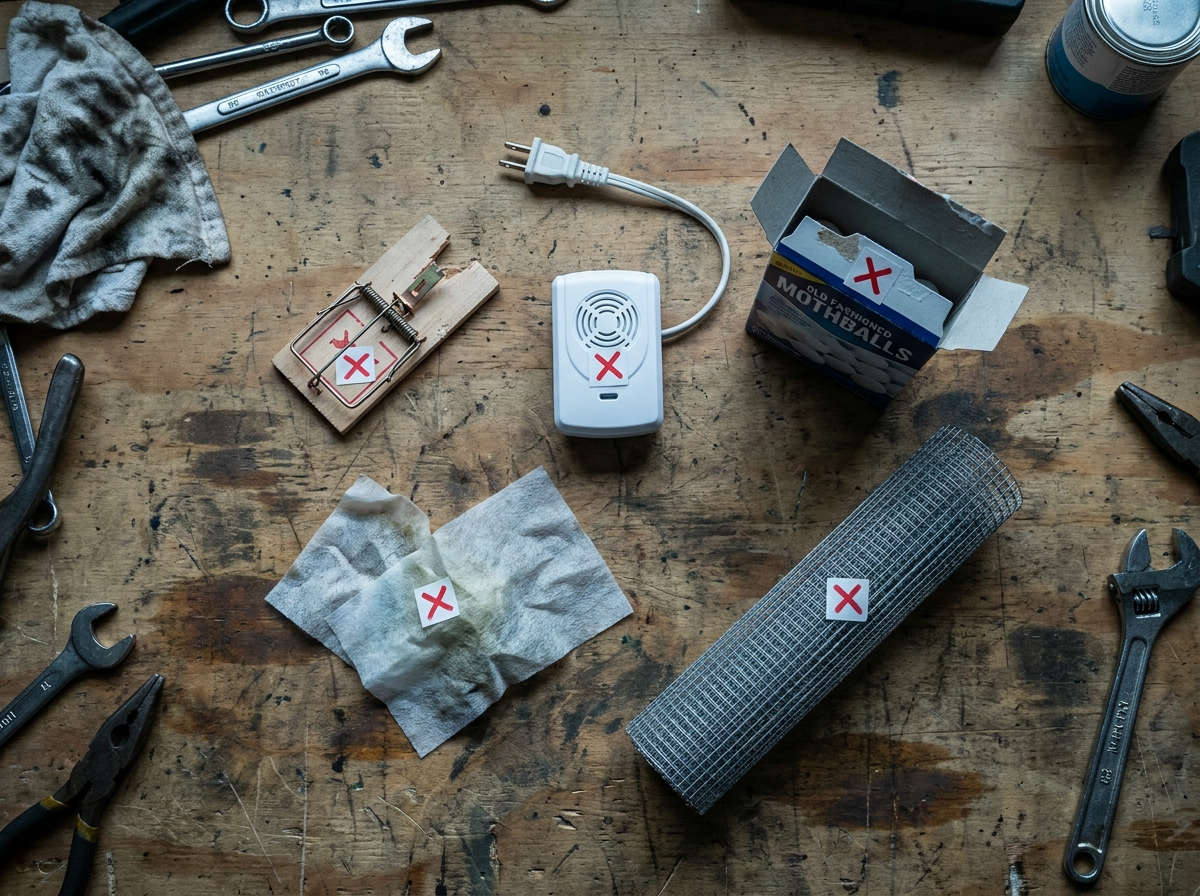
- Mouse traps — one mouse at a time, and something to dispose of every morning.
- A cheap ultrasonic plug-in — quiet within days, like it was never there.
- Mothballs — stunk out the whole garage, didn't slow them down.
- Dryer sheets stuffed around the engine — they nested on top of them.
- Wire mesh over the intake — they found another way in underneath.
Wiring repairs like this commonly run $1,200–$4,800, sometimes more, depending on what's damaged. And plenty of insurers treat rodent damage as excluded "preventable maintenance" rather than a covered claim — worth checking your own policy before you assume you're covered.
Why Nothing Off the Shelf Actually Stops Them

I finally dug into why the cheap ultrasonic plug-ins never work — and it's public record. Back in 2001 the FTC issued warnings against more than 60 manufacturers of single-frequency ultrasonic repellers for making claims their devices couldn't back up.
The reason is simple: rodents habituate. A single, fixed frequency is just background noise to them within a couple of weeks — same as how you stop hearing your own refrigerator hum.
So the fix isn't a louder version of the same idea. It's removing the "stable target" a rodent's brain learns to ignore in the first place.
What Actually Changes the Outcome: Rotating Signals, Not One Fixed One
Instead of one frequency running on a loop, a 4-in-1 rotation — ultrasonic, electromagnetic, pressure wave, and strobe — keeps cycling through modes so there's never a stable signal for a rodent to adapt to.
No poison. No traps. No dead rodents to deal with in the morning. Just a deterrent environment that rotates faster than a rodent can get comfortable in it.
It's the difference between a security light that stays on (easy to get used to) and one that moves — you can't tune it out.
I Found It That Night

I searched for a plug-in that actually rotated signal types instead of running one tone on repeat. That's how I landed on the DremaTech 4-in-1 Rodent Shield.
4.7 stars, 240 verified reviews. What stopped me scrolling were the reviews from other truck and garage owners:
Week 1: "Wait — Is It Actually Working?"
I plugged the Shield in at the workbench outlet, closest point to the truck's front end. Then I watched.
Month 2: "A Customer Asked What I Was Using"
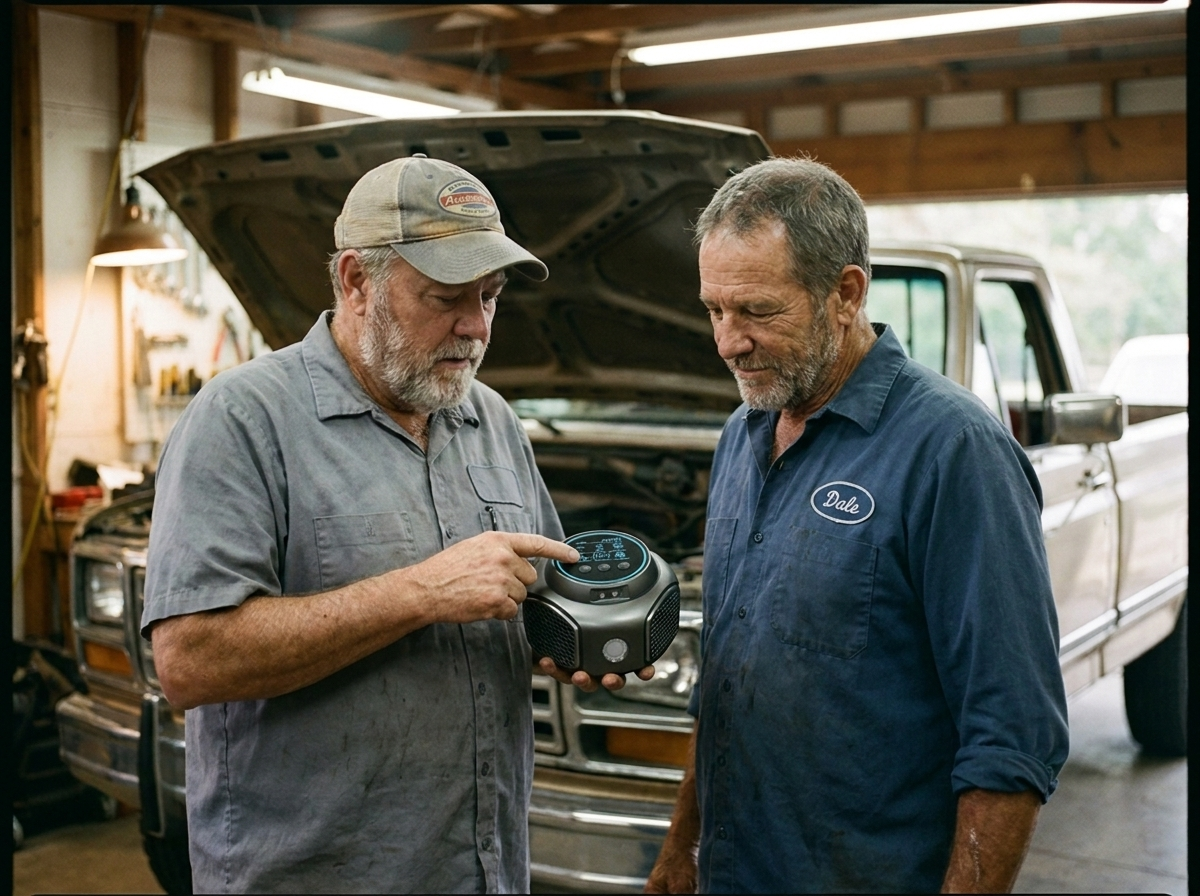
A regular customer mentioned his Silverado had the same problem — fourth time that year. For the first time, I actually had an answer I knew held up.
He ordered one before he left the shop.
By month two I'd placed one in my wife's car, one in the stored motorcycle's corner of the garage, and one by the riding mower in the shed.
Why This Wins Where Everything Else Loses
Traps and poison deal with a rodent after it's already chewing on your wiring. That's backwards. By the time you've caught one, the damage is already done.
A rotating multi-signal deterrent is a security system installed before the break-in — not a trap set after the burglar's already inside.
Real Customers, Real Results

Hadn't slept through the night in almost two weeks. Every time I dozed off I'd hear it again, right above the bedroom. Plugged this in on the Tuesday, put it up near the loft hatch like the guide said. Thursday night was the first full night I'd had in weeks.

I've kept this garage in order for thirty years, never had a problem I couldn't handle myself until this. Found droppings behind the workbench and it threw me. Got a quote from an exterminator and about fell over at the price. Ordered this instead, followed the placement guide, sealed a gap by the side door myself.

Won't do poison with the dog and grandkids in and out of the barn all summer, so this was really the only thing that made sense. Three weeks now, nothing on that shelf since.
Showing our three approved customer testimonials plus Maisie B.'s vehicle-specific review from the product page — fewer cards than the original source used, since we don't fabricate additional reviews.