
The Biggest Lie About Cleaning Up After Mice Is That Once You Clean It, It's Done — Why Fall Is When That Cycle Starts Repeating Every Single Night
You wipe down the counter. Bag up the contaminated food. Disinfect the shelf. Feel, for a moment, like the kitchen is yours again.
Then the next morning, there it is. Fresh droppings. A new corner chewed through.
Same counter. Same shelf. Same routine, starting all over.
I believed, for a long time, that this was just something you dealt with a few times and then it stopped.
It doesn't stop. Not once they're actually in the house.
My name is Trevor DeMarco. Retired electrician, outside Cedar Rapids, Iowa. Thirty-some years working in other people's houses, keeping my own in decent shape. Last fall I found out what it's like when a house stops feeling clean — not because it's dirty, but because you can never be sure it's stayed clean since the last time you checked.
It Started With a Sound I'll Never Forget
First week of October. First hard cold night of the year, furnace kicking on for the first time since spring.
That's when I heard it. Scratching, behind the kitchen wall. Steady.
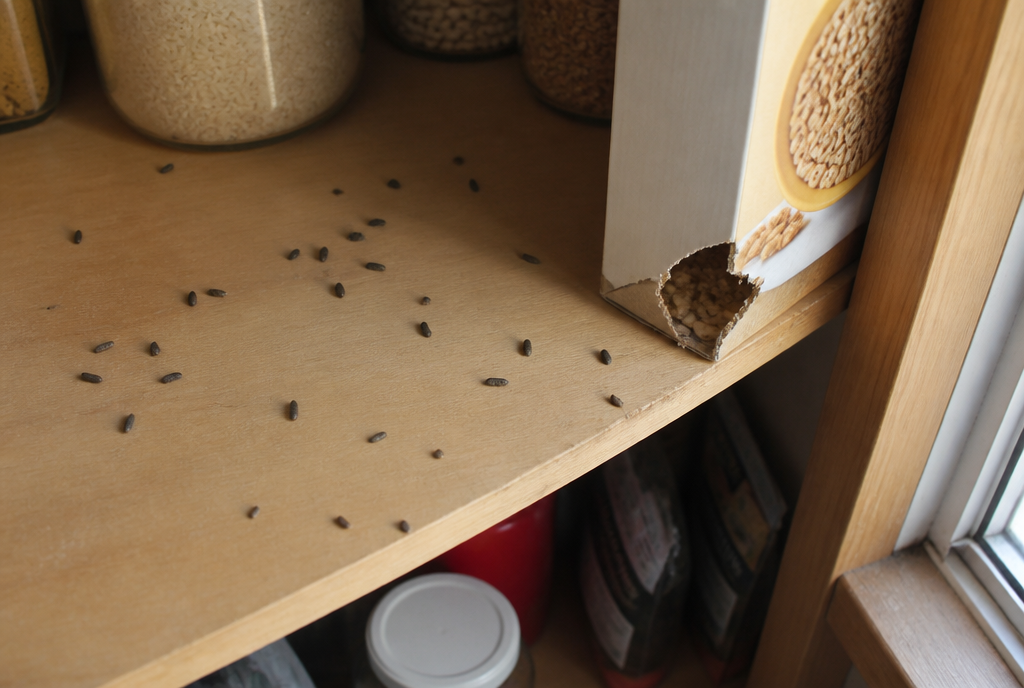
The next morning, Linda found droppings along the base of the pantry shelf. We threw out a bag of flour, a box of cereal, wiped the shelf down with disinfectant, put everything back in sealed containers.
Problem solved, I figured.
Two days later — fresh droppings. Same shelf.
How Did It Get This Bad?
Let me back up.
First signs came in September. A few droppings behind the pantry door. Corner gnawed off a bag of birdseed in the garage. I cleaned it up, moved on, didn't think much of it.
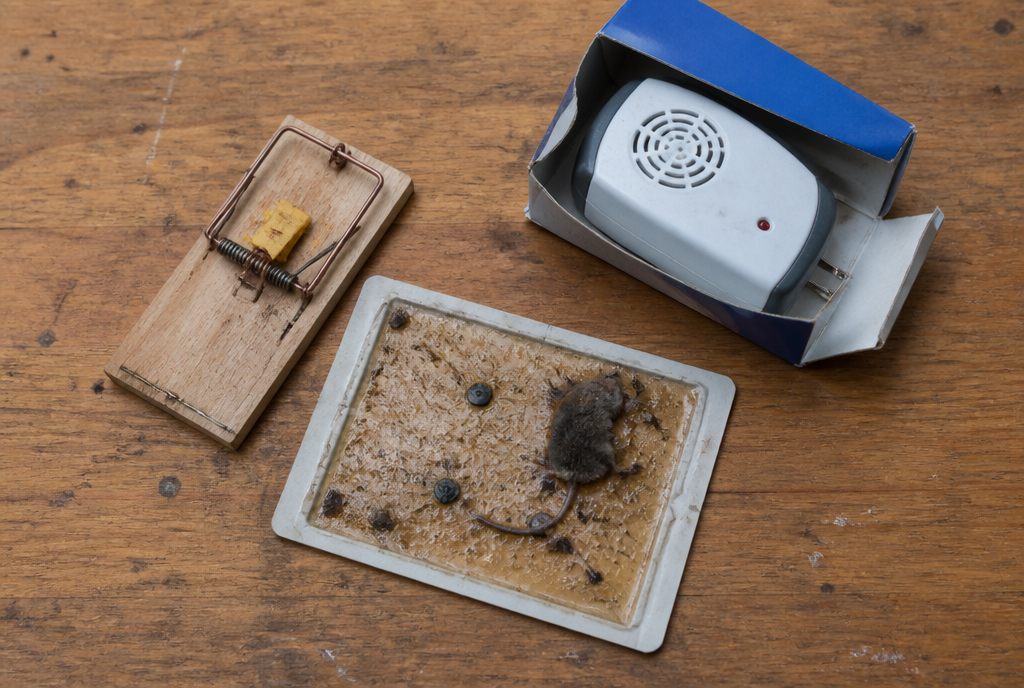
I did what most people do. Bought snap traps. Set glue traps I hated using. Picked up a plug-in ultrasonic unit at the hardware store.

None of It Made a Dent — and the Cleanup Never Stopped
The traps caught two mice the first week. Then nothing.
The ultrasonic unit ran for six weeks. Never slowed anything down — the FTC's been warning about those since 2001; rodents get used to the sound in days, and walls block half of it anyway.
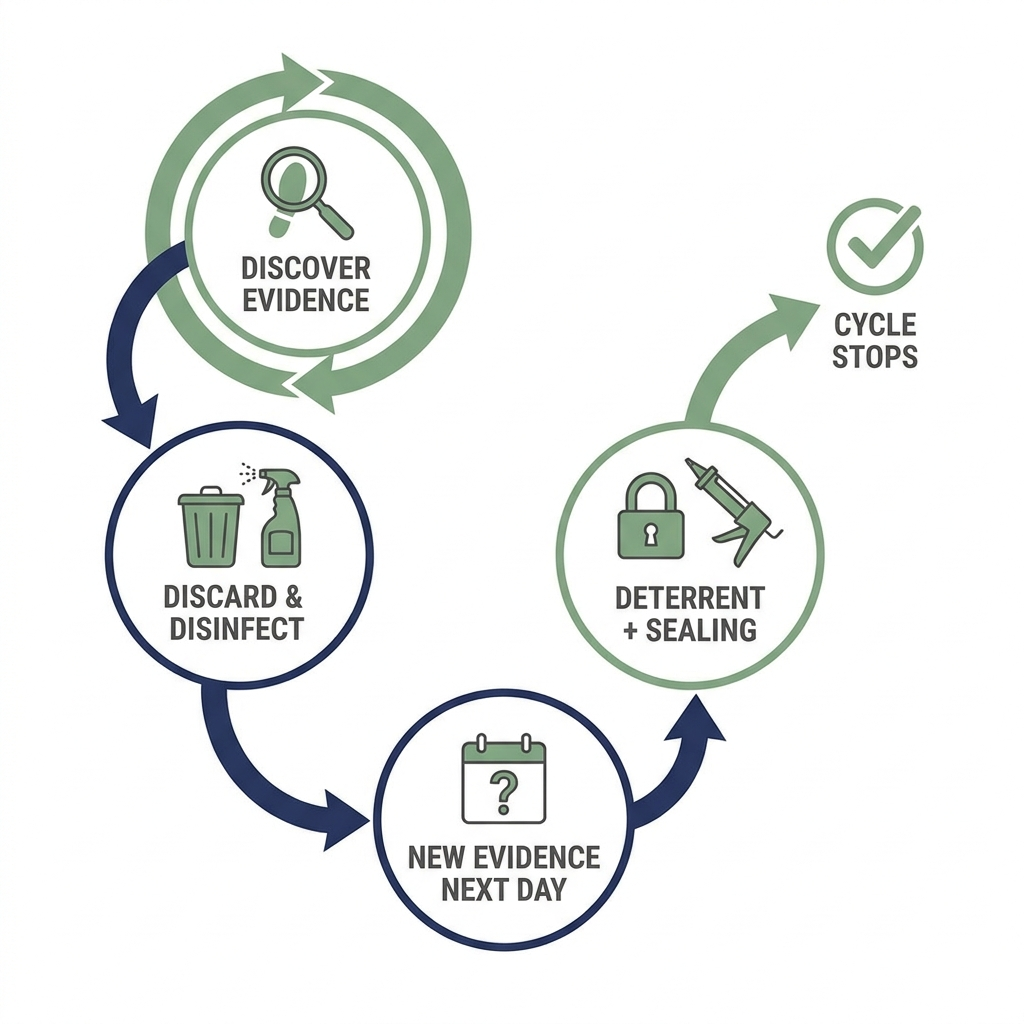
Meanwhile the routine kept repeating. Find droppings. Discard the food. Wipe down. Repeat two days later. By late October we were doing it in four different places — the pantry, the cupboard under the sink, the garage workbench, and once, on the dresser in the guest room where the grandkids sleep when they stay over.
That last one is the one that got to me. You clean a kitchen shelf and move on. You clean your grandkids' dresser and you don't move on from that one so easy.
I called an exterminator. $475 for the initial treatment, plus a service plan running $50 a month, minimum one-year contract. On a fixed income, that's a hard number to swallow for a problem I still half-believed I could scrub my way out of.
"What about poison?" I asked.
He looked at Duke, snoring by the door. "With a dog in the house, I wouldn't recommend it." He didn't need to finish that thought.

The Night I Realized I Was Never Actually Catching Up
So I kept doing what I'd been doing all fall — clean it, bag it, disinfect it, tell myself that was the last time.
It was never the last time.
Last Saturday I pulled the cover off an outlet behind the stove to check a flickering light. Found shredded insulation packed into a nest against the splice, droppings everywhere, and — pressed right against it — a half-dozen babies.
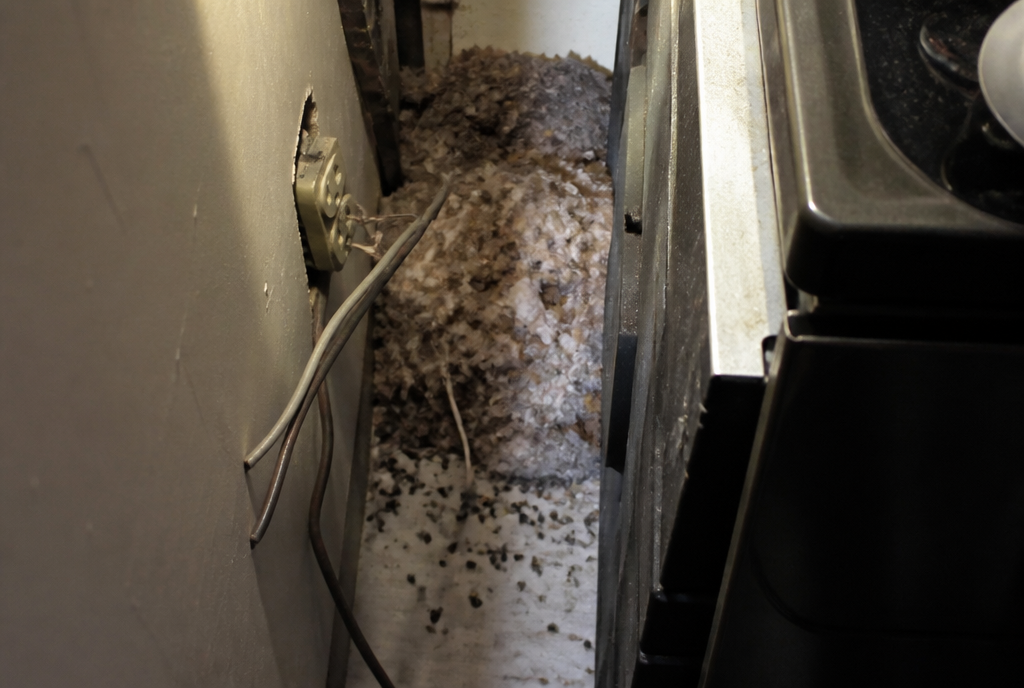
That's when it hit me. I hadn't been cleaning up a problem. I'd been wiping the surface of something that kept rebuilding itself somewhere I couldn't see, every night, faster than I could keep up with it during the day.
I looked it up: according to the NPMA, a female house mouse can produce up to a dozen babies every three weeks, and she can go right back into estrus within 24 hours of giving birth. Indoors, where it's warm, they don't pause for winter. They don't pause at all.
One cleanup wasn't the end of anything. It was never going to be, not with a colony behind the wall producing a fresh reason to clean every couple of days.
What I Found When I Did a Full Sweep
I wish I hadn't looked as hard as I did.
Behind the washer in the laundry room — another nest, fresher than the kitchen one. Droppings on top of the dryer sheets I keep on the shelf above it.
Under the garage workbench — enough droppings that this had clearly been going on for weeks, not the few days I'd been telling myself.

The Part That Actually Scared Me Wasn't the Droppings — It Was Learning How You're Actually Supposed to Clean Them Up
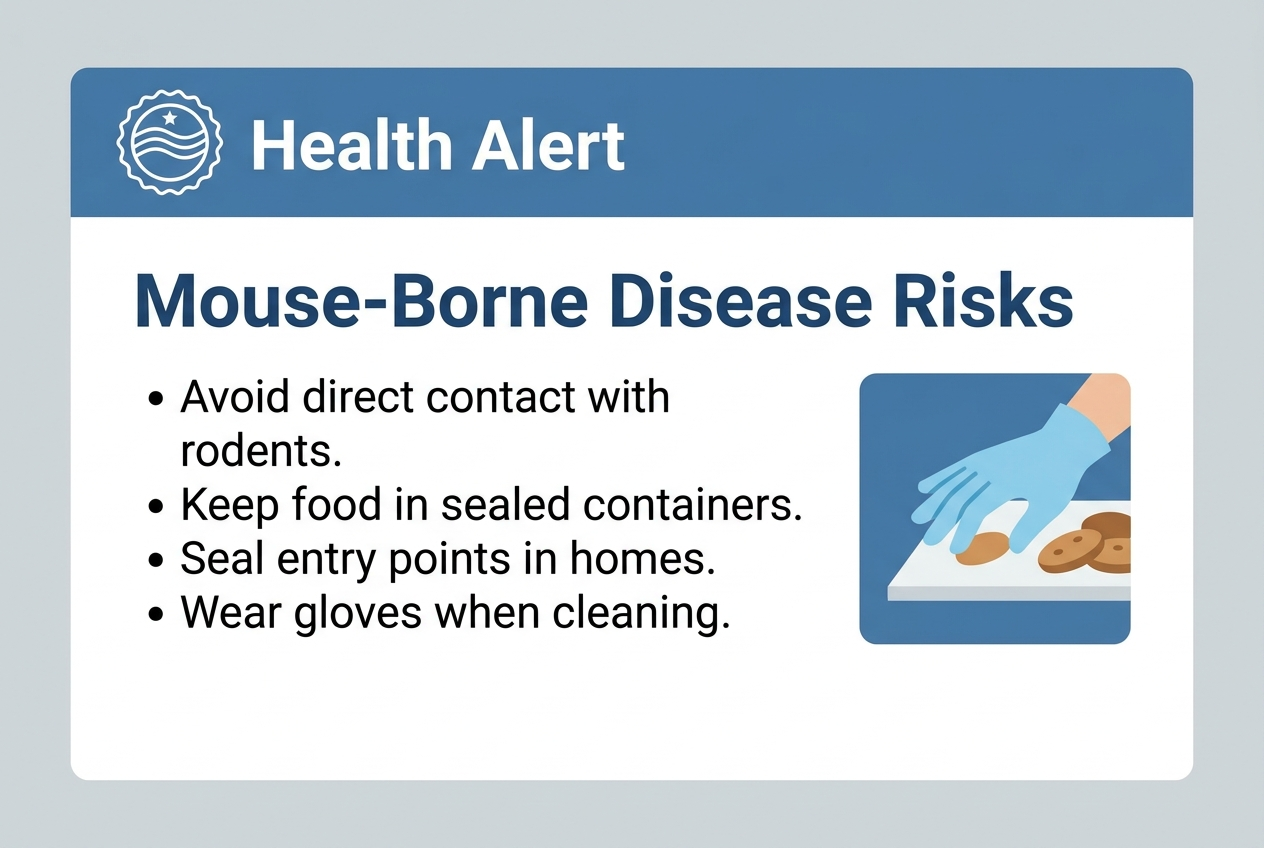
I looked up the CDC's actual guidance, because I wanted facts, not internet panic.
I'd been dry-wiping a kitchen shelf with a paper towel for a month.
The CDC also documents rodents as carriers of leptospirosis, salmonellosis, and lymphocytic choriomeningitis, transmitted through droppings, urine, or contact7 — meaning every one of those "quick wipe-downs" I'd been doing wasn't actually neutralizing anything. It was just moving contamination around a kitchen my grandkids eat breakfast in.
How Do You Stop a Cleanup Cycle That Has No End Date?
I sat on the back step that night and did the math on what this was actually costing me — not just in money, though $475 for a quote I hadn't accepted and $60 in gear that hadn't worked was real enough — but in time. Every few days, another room, another disinfecting cycle, another bag of food in the trash, and not one bit of it addressing why it kept happening.
I was done pretending a paper towel and a bottle of Lysol was a solution.
That's when Stan's truck pulled into the driveway.
Stan Had Been Exactly Where I Was
"Rough one?" he said, before I'd said a word.
"Four spots, Stan. I've cleaned that kitchen shelf probably ten times this month and it's dirty again every time I turn around."

He nodded slow. "Two winters ago, same thing at my place. I was bleaching that pantry every other day and it never once stuck. Almost sold the house over it."
"What changed?"
"Called a guy I've used for years. Walt. He'll tell you straight what's going on instead of selling you a contract."
What Walt Told Me About Why the Cleanup Never Stuck
"Trevor, here's the thing nobody tells you," Walt said. "You can disinfect that shelf every single day for a year, and it'll never feel finished, because you're cleaning up after something that's still living behind your wall. The mess isn't the problem. It's the symptom."
"So what actually stops it?"
"You need to make the house genuinely uncomfortable for them to stay in, and you need to find and close whatever's letting them keep getting back to that shelf in the first place. Do both, and the cleanup stops being a nightly chore. It becomes a thing you did once."

The Four-Layer Approach That Actually Made Sense to Me
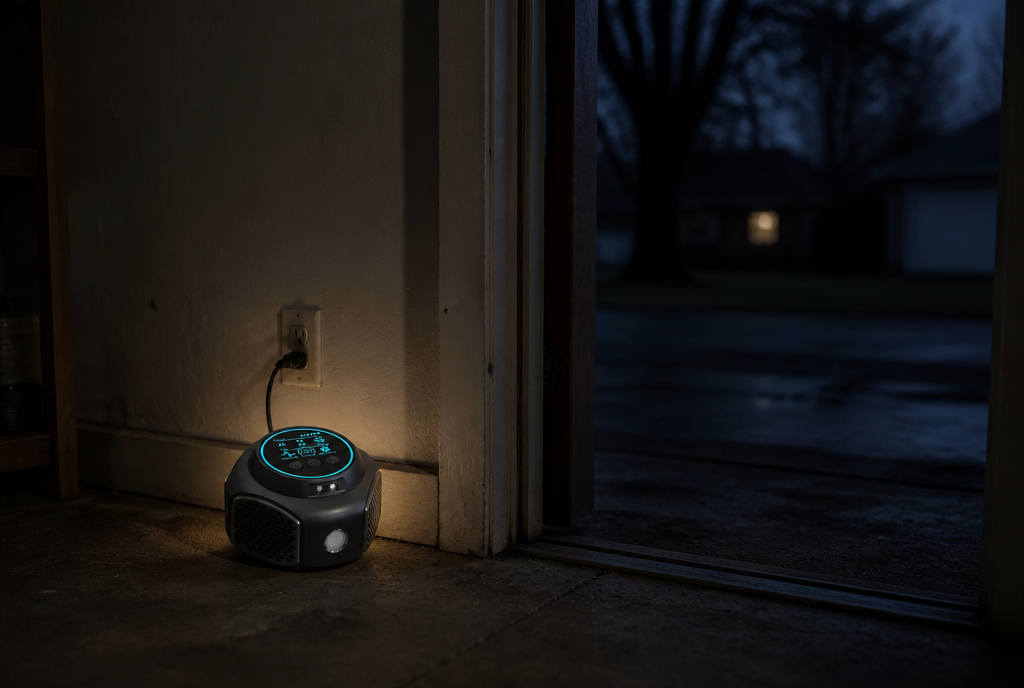
"There's a unit called the Drema Tech 4-in-1 Rodent Shield," Walt said. "It runs four separate deterrent signals instead of one — pressure-wave, ultrasonic, electromagnetic through the wiring, and unpredictable flashing light. Because it rotates across all four, there's nothing for them to get comfortable with the way they do with a single plug-in unit."
"It comes with a guide showing you where mice actually get into a house your age — foundation gaps, pipe penetrations, garage seals. I'll say it straight: no device replaces finding and closing those gaps. Anyone who tells you otherwise is selling you something."
"Will the cleaning stop completely?"
"It'll stop being a nightly event. That's the honest answer. You do both things — the deterrent and the sealing — and you go from wiping down that shelf every other day to not thinking about it at all."
That's the unit Walt was talking about — four deterrent signals, one plug-in device, plus the rodent-proofing guide he'd mentioned.
"What about the ultrasonic thing I already tried?"
"Single frequency, single mode. They get used to it inside a week, and walls block half of it anyway — the FTC's been saying that publicly for twenty years. This runs four signal types on rotation, so there's nothing steady for them to adapt to."
"What about poison, just to be done with it?"
"Not with a dog in the house. They die wherever they happen to be — in a wall, under a cabinet — and then you've got a smell you can't reach and a dog that might find it before you do."
"So why not just call an exterminator again?"
"You can. But most of what you're paying for is a technician setting the same traps you can set yourself, on a contract that renews whether you need it or not. This plus sealing your own entry points does the same job for a fraction of the cost — and nobody's got you locked into a year."
I Was Skeptical. Then I Looked at the Reviews.

First real night's sleep in weeks!
Hadn't slept through the night in almost two weeks. Every time I dozed off I'd hear it again, right above the bedroom. My wife thought I was losing it honestly. Plugged this in on the Tuesday, put it up near the loft hatch like the guide said. Thursday night was the first full night I'd had in weeks. Woke up actually rested for once.
Dale W.

Finally feels like my garage again
I've kept this garage in order for thirty years, never had a problem I couldn't handle myself until this. Found droppings behind the workbench and it threw me, honestly. Got a quote from an exterminator and about fell over at the price. Ordered this instead, followed the placement guide, sealed a gap by the side door myself. Feels like my space is mine again haha.
Mark S.

Wish I'd found this before the pantry shelf
What got me wasn't even seeing one, it was finding droppings on the shelf right next to where the grandkids' snacks were kept. Made my skin crawl thinking about what they'd been exposed to... Won't do poison with the dog and grandkids in and out of the barn all summer, so this was really the only thing that made sense. Three weeks now, nothing on that shelf since.
Josie W.
"I have 2 dogs and can't poison the mice because if the dogs find them dead and eat them then I have that to deal with. Well let me tell you I don't have mice in the house, the shop, or in the RV my niece stays in."
That was me. Same constraints. It worked for her.
I Wasn't Going to Keep Cleaning the Same Shelf Forever
By this point I'd bleached that pantry more times than I could count, thrown out three separate bags of food, and still couldn't put a box of cereal away without checking behind it first.

Right now — for the next 48 hours only, to anyone who's landed on this page —
$54.99 $109.99 · 60-Day Guarantee
Claim This Price →I ordered it that night.
Where I Put It, and What Actually Changed
Placed it in the utility room, closest to where the activity had been worst. Followed the guide, sealed the gaps I could reach myself.

- Day 1: three droppings — down from the daily average we'd been finding.
- Day 4: one dropping, far from where I'd placed it.
- Day 9: nothing. First morning in over a month I didn't have to disinfect a single surface.
I'm not going to tell you the cleaning stopped forever the day it arrived — that's not honest, and Walt never claimed it would. What I can tell you is the droppings stopped showing up, the shelf stayed clean between checks instead of just after them, and I stopped opening that pantry door bracing for what I'd find.

Linda noticed before I said anything. She put a box of crackers straight back on the shelf without checking behind it first. First time in two months she'd done that without thinking about it.
Fall Is When This Cycle Starts — and When It's Easiest to Break
If you're wiping down a shelf, a cupboard, a dresser — cleaning the same spot over and over and never quite trusting it's actually clean — you're exactly where I was in September.
The NPMA reports rodents invade an estimated 21 million U.S. homes every winter, and close to half of all infestations begin in fall, as the cold pushes them toward the nearest warm structure. Yours, if the cycle's already started.
- More droppings to disinfect, in more rooms.
- More food discarded.
- More fabric and surfaces you can't fully trust again until the next wipe-down.
- More disease exposure with every "quick clean" that isn't done the CDC's way.
- A cycle with no natural end date.
Right now, before the cold really sets in — that's when to stop cleaning the symptom and start closing the source.

I read a few reviews mentioning this exact unit running low out of Drema Tech's US warehouse once the cold weather hits and everyone's placing the same order at once. I wasn't going to sit on the fence and end up on a waiting list heading into the first frost. If the price and the guarantee make sense to you, I wouldn't wait around either.
Questions Before You Order
Will it bother my pet?
No — the signals are built to target rodent hearing and behavior specifically. Duke never reacted to it once, and it's the same reassurance in the reviews above from other dog and cat owners.
I tried cheap plug-ins before. Why would this work?
Because a single-frequency plug-in gives rodents one thing to get used to, and they do — usually within days. This rotates four different signal types, so there's no single pattern for them to adapt to.
How fast will I notice a difference?
For us it was gradual, not instant — down to a handful of droppings within days, and nothing at all by day nine. That's roughly in line with what other reviewers report.
What about small pets — rabbits, guinea pigs?
If you've got small caged pets, keep the unit in a different room than their enclosure, the same way you'd keep any deterrent device away from them.
Is it safe with children in the house?
Yes — that was the whole reason poison was off the table for us in the first place, with grandkids in and out.
How does the return work?
You've got 60 days. If it hasn't made a difference in your house, send it back.
Does it eradicate rodents completely?
No, and I won't tell you otherwise — this is a deterrence device, not an extermination guarantee. Combined with sealing the entry points Walt pointed us to, it's what took our activity from daily to none.
$54.99 $109.99 · 60-Day Guarantee · Free Shipping
Get the 4-in-1 Rodent Shield →